Jan 13, 2026
As a construction consultant, offering owner’s representation, STRUCTR helps owners make informed decisions, manage risk, and protect their investments.
In today’s construction environment, owners must make high-stakes decisions quickly as costs fluctuate, schedules compress, and project teams grow more complex. Owners who do not manage construction projects every day may struggle to evaluate technical details, challenge assumptions, or anticipate how a decision in one phase could affect another. Even experienced owners may lack the internal resources to do so.
An owner’s representative brings construction expertise directly to project decisions, helping owners identify potential issues, evaluate alternatives, and understand the financial and operational implications before committing to a course of action.
An owner’s representative serves as an extension of the client’s team, providing technical guidance and oversight from early planning through project completion. The role takes a holistic look at construction projects across disciplines, connecting decisions about design, cost, schedule, procurement, and construction to the owner’s broader goals.
For example, while a design change may improve a building’s functionality, it could also introduce additional costs or extend the construction schedule. An owner’s representative would evaluate those implications together, providing the owner with a clearer understanding of the options before decisions are made. This perspective complements the expertise of architects, contractors, engineers, and developers, each of whom brings specialized knowledge and defined responsibilities to the project.
At STRUCTR, that perspective is informed by decades of hands-on construction experience. Many of the firm’s leaders built their careers in preconstruction, estimating, scheduling, and project management. Their understanding of how projects are priced, planned, procured, and built helps owners assess the practical implications of decisions throughout the project lifecycle.
STRUCTR works with owners across different project delivery methods and construction teams, providing objective guidance regardless of the contractor or design team selected. When an engagement involves sensitive project information, non-disclosure agreements help protect confidentiality.
Depending on the owner’s needs, STRUCTR’s construction consulting services may include feasibility studies, site evaluation, budget validation, schedule analysis, constructability reviews, procurement strategy, and construction oversight. Although the scope varies by project, the responsibility remains consistent: helping owners understand their options and the consequences of their decisions.
Early project plans often rely on assumptions about site conditions, infrastructure, costs, and schedules that can prove costly if left untested. For example, a property may appear suitable for development until further investigation reveals insufficient utility capacity, unexpected sitework requirements, or permitting constraints. Similarly, a preliminary budget may overlook infrastructure improvements, equipment, or other costs necessary to make the facility operational.
An owner’s representative helps investigate these conditions through feasibility studies, due diligence, preliminary cost evaluations, and schedule planning. Understanding these constraints before committing to a site or advancing design gives owners more options to adjust scope, allocate capital, or reconsider their approach.
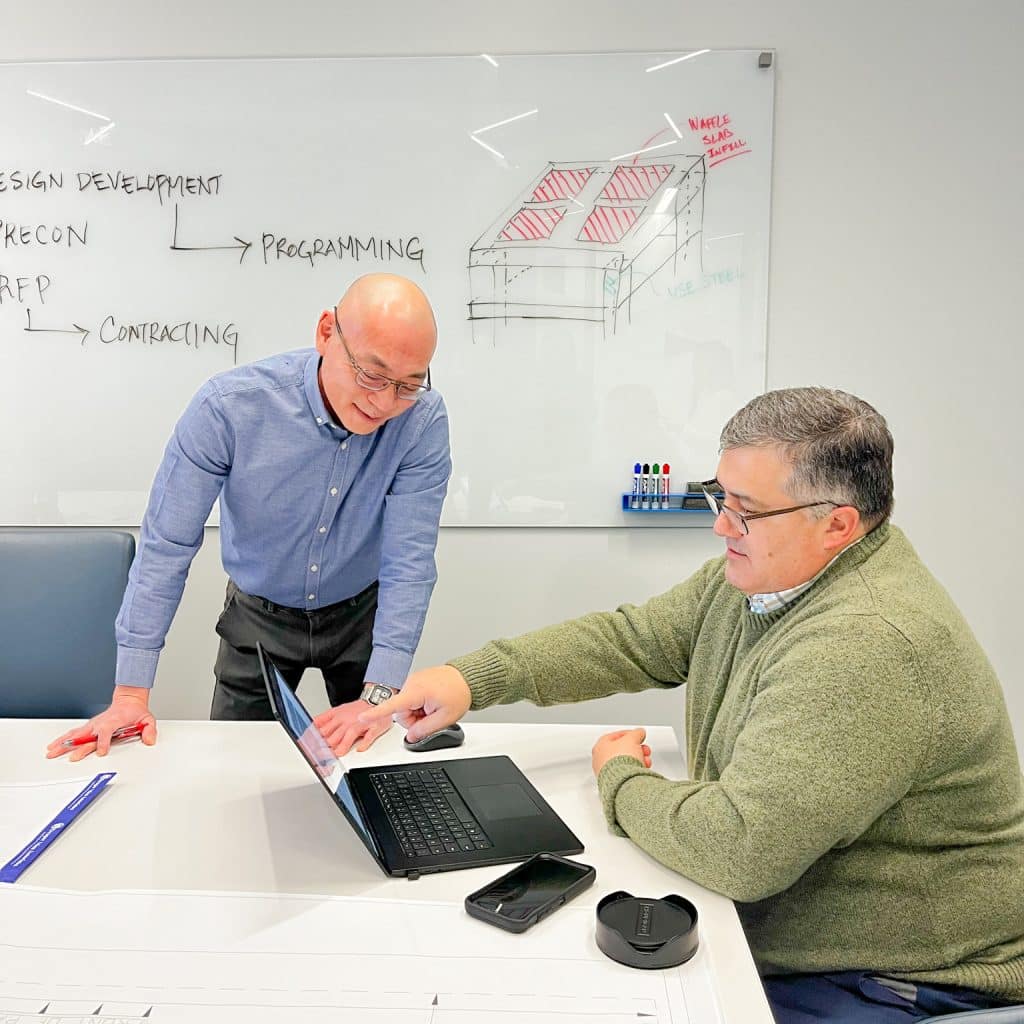
Early review of project plans and technical information helps owners evaluate feasibility, identify potential constraints, and address construction cost or schedule concerns before construction begins.
What looks good on paper doesn’t always translate easily to the field. At times, design decisions can seem straightforward, but can introduce construction challenges, added costs, or maintenance headaches down the road.
Constructability reviews help catch those issues before construction begins. An owner’s representative brings practical building experience to the design process, looking at how materials and systems will be installed, how different trades can coordinate their work, and whether equipment can be easily accessed for future maintenance.
These reviews can uncover opportunities to simplify construction, avoid costly rework, and make choices that serve the building for the future. Sometimes a higher upfront investment makes more sense when weighed against long-term maintenance and operating costs.
Construction budgets and schedules are ever evolving as projects take shape. Design revisions, material and equipment lead times, and unforeseen site conditions can all affect the original plan.
An owner’s representative helps owners stay ahead of these changes by reviewing estimates, challenging schedule assumptions, and evaluating the cost and timing implications of proposed changes. Once construction is underway, that oversight includes monitoring progress against the project schedule, reviewing contractor updates, and verifying that completed work aligns with expectations. Regular site walks provide firsthand insight into field conditions, potential issues, and upcoming milestones that may require the owner’s attention.
Together, these efforts help owners understand where the project stands and address concerns before they become costly delays or budget overruns.
Construction decisions rarely affect just one discipline. A design modification may change material quantities, equipment requirements, installation sequencing, or future maintenance access. Without coordination, a solution that works well for one part of the project can create complications elsewhere.
An owner’s representative evaluates those connections and brings the right people into the conversation. This may involve reconciling competing priorities between design and construction, addressing operational concerns raised by facilities staff, or breaking down the cost and schedule implications of a proposed change to the project’s stakeholders. Owner’s representatives consider how individual decisions affect the broader project and help owners evaluate alternatives with a more complete understanding of their consequences.
The lowest construction cost isn’t always the best long-term investment. Decisions about building materials, systems, and equipment can have lasting implications for maintenance, energy use, and future capital expenses.
An owner’s representative helps owners weigh long-term operating costs against immediate budget and schedule pressures. This includes considering how easily systems can be maintained or replaced, whether the building can adapt to changing needs, and how energy efficiency and sustainability affect the project’s total cost of ownership.
The result is a more complete understanding of project value, one that considers both the cost of delivering the building and the cost of owning and operating it.
Every construction project presents questions that cannot be fully answered at the outset. Site conditions, evolving costs, design complexities, and competing priorities can all influence the path forward.
An experienced owner’s representative helps bring those unknowns into focus early, when owners have more opportunity to evaluate alternatives, address potential challenges, and avoid costly changes. By connecting decisions across planning, design, and construction, an owner’s representative gives owners greater control over their investment and a clearer path to a building that meets today’s needs and performs well into the future.
Owner’s representation is a construction consulting service that provides project owners with technical expertise, oversight, and guidance throughout planning, design, and construction. An owner’s representative helps evaluate project feasibility, validate budgets and schedules, identify potential risks, and assess how decisions may affect construction costs and long-term building performance.
An owner’s representative helps owners navigate the technical and financial decisions involved in a construction project. Responsibilities may include reviewing contractor estimates, evaluating schedule assumptions, coordinating design and construction teams, monitoring jobsite progress, and assessing proposed changes.
For example, when a contractor proposes a change that affects both cost and schedule, an owner’s representative can review the supporting information, evaluate alternatives, and help the owner understand the implications before approving the work.
An architect is responsible for the building’s design, while a general contractor manages construction according to the project contract. An owner’s representative provides oversight and advice from the owner’s perspective, considering how decisions across those disciplines affect the overall investment.
This can include reviewing construction costs, evaluating proposed design changes, monitoring schedule performance, and coordinating input from the project team to help the owner make decisions with a complete understanding of the consequences.
Ideally, before committing to a site, budget, or design. Early involvement allows an owner’s representative to evaluate development constraints, identify costs that may be missing from preliminary estimates, and assess whether proposed schedules are achievable.
Owners can also engage construction consulting services during design or active construction, particularly when facing unexpected costs, schedule delays, complex coordination issues, or limited internal project management resources.
Yes. An owner’s representative can work alongside different general contractors, architects, engineers, and construction management teams. Their responsibility is to the owner, regardless of which firms are selected to design or build the project.
For consulting firms with affiliations to construction companies, clearly defined responsibilities and confidentiality protocols allow sensitive project information to be protected while the owner’s representative provides guidance focused on the client’s interests.