Feb 2, 2026
See how STRUCTR guided the UVA Contemplative Commons through LEED Gold certification, advancing material transparency, waste diversion, and sustainable construction.
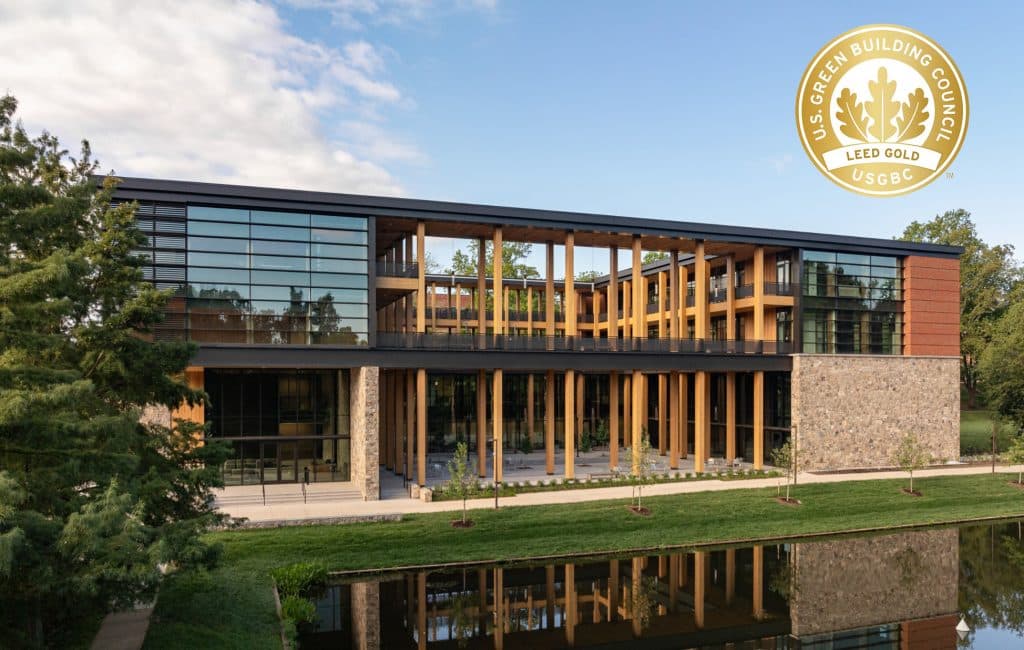
The LEED Gold-certified UVA Contemplative Commons integrates high-performance building strategies with a material palette and design that respond to its setting overlooking the Dell.
The University of Virginia’s Contemplative Commons is a 55,000-square-foot academic and community-focused facility designed to support interdisciplinary learning, well-being, and human flourishing. Located along Emmet Street and overlooking the Dell, the building serves as a flexible hub for classrooms, research, and community engagement.
With a project budget of approximately $72.6 million, the facility includes adaptable spaces, strong indoor-outdoor connections, and a pedestrian bridge linking Central Grounds. The design emphasizes flexibility, natural light, and integration with the surrounding landscape. These principles align closely with the University’s broader sustainability goals.
From the outset, achieving LEED certification was a defined project objective. STRUCTR guided the certification process throughout construction, ensuring that sustainability goals translated into measurable outcomes.
The Contemplative Commons project entered construction with a clear but ambitious target: 59 LEED v4 BD+C points, just one point shy of Gold certification. That narrow margin left little room for missteps and placed a premium on disciplined execution from the outset. At the same time, the realities of the jobsite introduced added complexity. The team navigated tight site constraints that required just-in-time material deliveries, coordinated high-performance systems alongside specialized architectural finishes, and responded to evolving site conditions, including utility rerouting and the installation of a major off-project waterline. Layered onto these challenges was the need to align multiple stakeholders around rigorous LEED construction documentation requirements, where consistency and accuracy were critical to success.
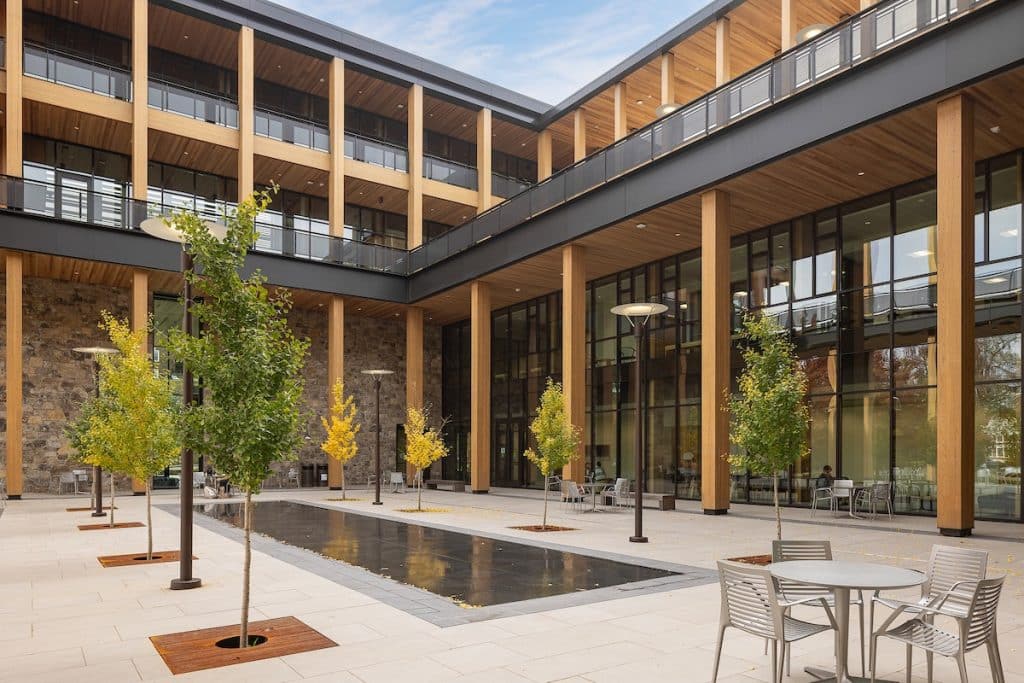
Natural light, connections to the outdoors, and exposed mass timber are integral to the Contemplative Commons, supporting a building designed around sustainability, flexibility, and human well-being.
Within this context, STRUCTR served as a steady point of coordination, guiding the LEED certification process while supporting the broader construction effort. Through its Energy & Sustainability consulting services, the team provided LEED consulting services, and ongoing site observations focused on quality and performance. Equally important was STRUCTR’s role in managing LEED construction documentation. Working closely with the preconstruction and project management teams, STRUCTR ensured that sustainability strategies were not only captured in the design but also carried through into field execution and properly documented for certification.
This continuity between design intent and construction execution became a defining feature of the project. Through consistent communication, proactive coordination, and detailed tracking of LEED construction documentation, STRUCTR helped translate sustainability goals into measurable outcomes. In a project where every point mattered, that level of alignment and accountability proved essential to achieving the desired result.
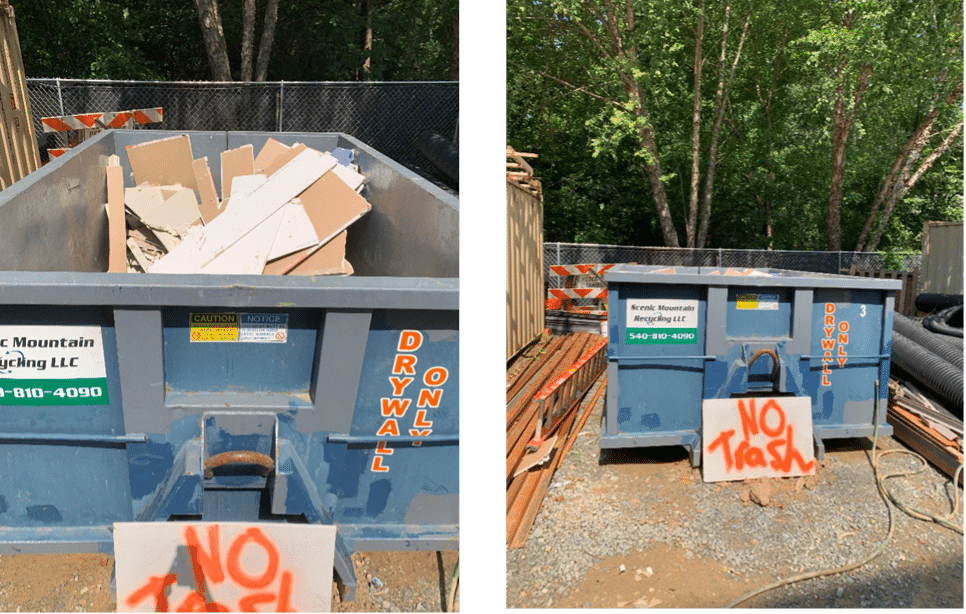
As part of UVA’s first drywall recycling pilot, dedicated containers allowed the project team to separate gypsum waste onsite for recycling. The program diverted 19 tons of drywall from landfill, with the recovered material repurposed for agricultural use in Western Virginia.
Sustainability on the Contemplative Commons project was not confined to design intent. It was actively shaped in the field through a combination of innovation, coordination, and disciplined material strategy. One of the clearest examples of this approach was the drywall recycling pilot, the first implemented on a construction project at the University of Virginia.
Introduced during peak construction, the initiative required the project team to identify and onboard a new recycling partner, Scenic Mountain Recycling LLC, while simultaneously adjusting jobsite operations. Through coordinated effort across trades, 19 tons of drywall waste were diverted from landfills. The recovered gypsum was repurposed as a soil amendment for livestock bedding in Western Virginia, creating a practical and regionally relevant reuse solution. The success of the pilot depended on clear communication, consistent waste separation practices, and active collaboration with subcontractors. Beyond contributing to LEED construction credits, the effort established a replicable model for future projects across the University.
At the same time, the project’s sustainability goals were reinforced through a deliberate approach to material selection and procurement. More than $3 million in sustainable materials were incorporated into the building, supporting LEED credits related to responsible sourcing and material transparency. That commitment extended well beyond the minimum thresholds for certification. The project sourced 58 products with Environmental Product Declarations (EPDs), including 18 beyond the threshold for exemplary performance, as well as 59 products with Material Ingredient Reporting disclosures, 19 beyond the exemplary performance threshold. Seven products also met enhanced material ingredient optimization criteria.
Together, these measures provided greater visibility into both the environmental impacts and chemical composition of the materials incorporated into the building. For the project team, that meant sustainability was evaluated not only through energy performance and construction waste diversion, but also through the materials selected to create the building itself.
STRUCTR played a key role in supporting this effort by tracking and documenting material compliance throughout procurement and installation. This ensured that sustainability objectives remained aligned with both LEED requirements and the broader goals of the project, translating thoughtful material decisions into verified outcomes.
The University of Virginia’s Contemplative Commons achieved LEED v4 BD+C Gold Certification, marking a significant milestone for both the project team and the University’s broader sustainability efforts. Entering construction just one point shy of the Gold threshold, and ultimately surpassing the goal with 61 points, this project reflects a disciplined and highly coordinated approach to execution and documentation. Every contractor-related LEED credit was approved on the first submission, an uncommon result that underscores the level of alignment maintained throughout the project. In addition, the team successfully diverted 1,475 tons of construction waste through recycling and diversion initiatives and procured more than $3 million in sustainable materials, reinforcing the project’s commitment to responsible building practices.
The impact of this work extends beyond certification. The processes established, and the trust built with the University, have directly informed ongoing collaboration on subsequent projects, including the Karsh Institute of Democracy. There, the team is advancing new sustainability frameworks, building on the foundation established at Contemplative Commons. This continuity reflects the value of a consistent and informed approach to construction consulting, where lessons learned are carried forward and applied to future work.
More broadly, the project illustrates how active LEED construction management can shape outcomes in meaningful ways. Certification is not achieved through design alone. It requires sustained coordination, clear communication, and accountability across all phases of construction. At Contemplative Commons, this approach translated ambitious goals into measurable results, demonstrating how thoughtful execution can reduce risk, strengthen performance, and deliver lasting value for institutional clients.